What is Baked Thekkere Da Adde?
Thekkere da adde is a traditional Mangalorean dish, typically steamed in turmeric leaves during the monsoon season. This version is a baked reinterpretation, where a batter of rice, cucumber, jaggery, and butter is ground, rested, and baked into a soft, fragrant, sliceable cake.
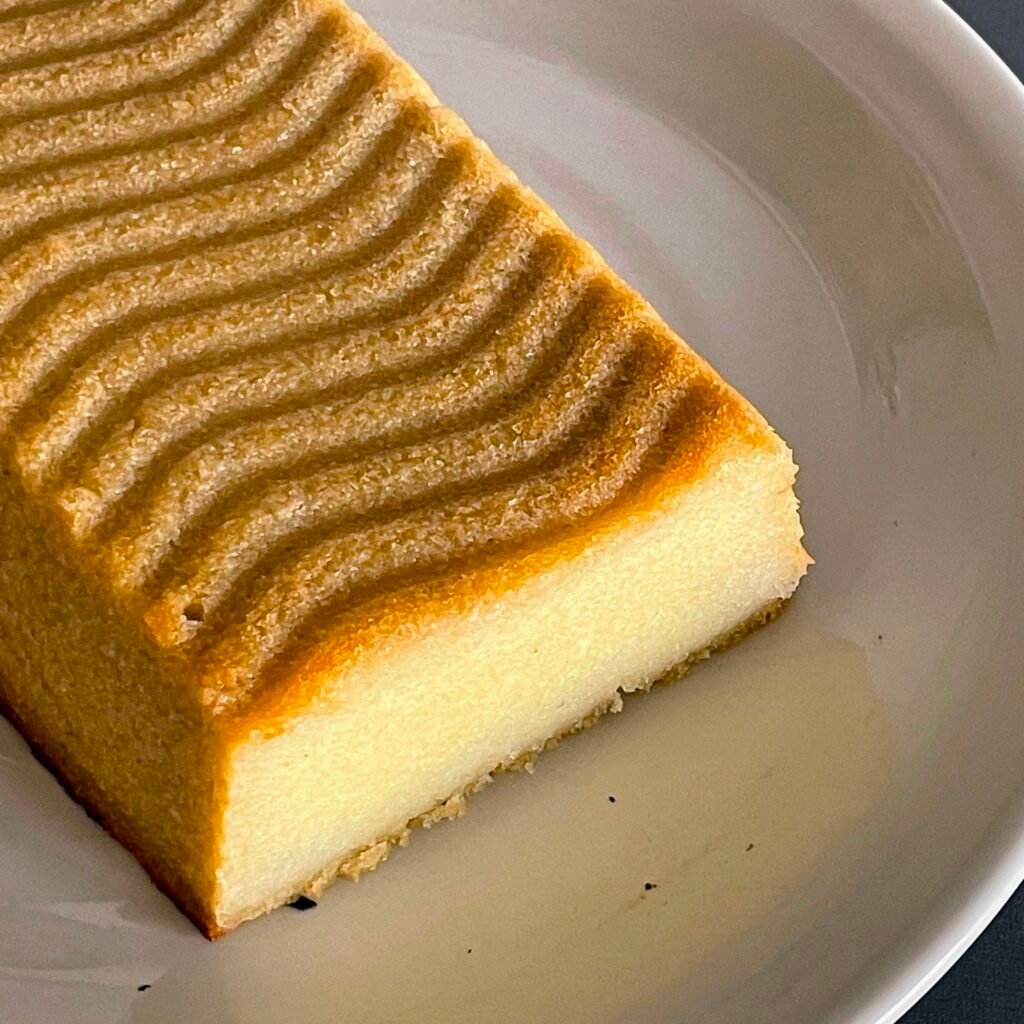
Unlike the classic steamed version, this one is richer, buttery, more structured, and cake-like, with deep caramel notes from jaggery and warmth from cardamom.
Growing up, this was a constant in my home during Aati (Ashada) – a significant month in the Tulu calendar, falling between mid-July and mid-August. It’s a time rooted in tradition, seasonal eating, and deeply comforting food. My mom made her own version of the traditional thekkere da adde – not steamed in turmeric leaves, but baked and enriched with butter. It was her signature. She even entered it into local competitions… and always won.
Over time, this recipe became a staple for me, too.
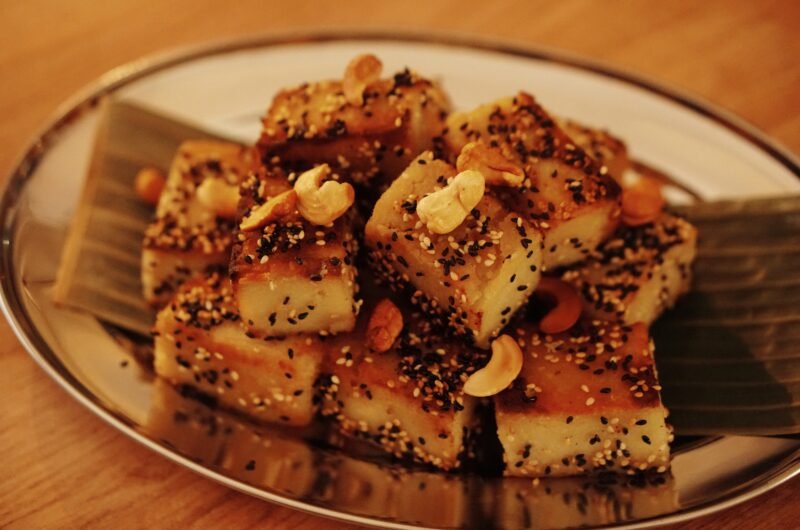
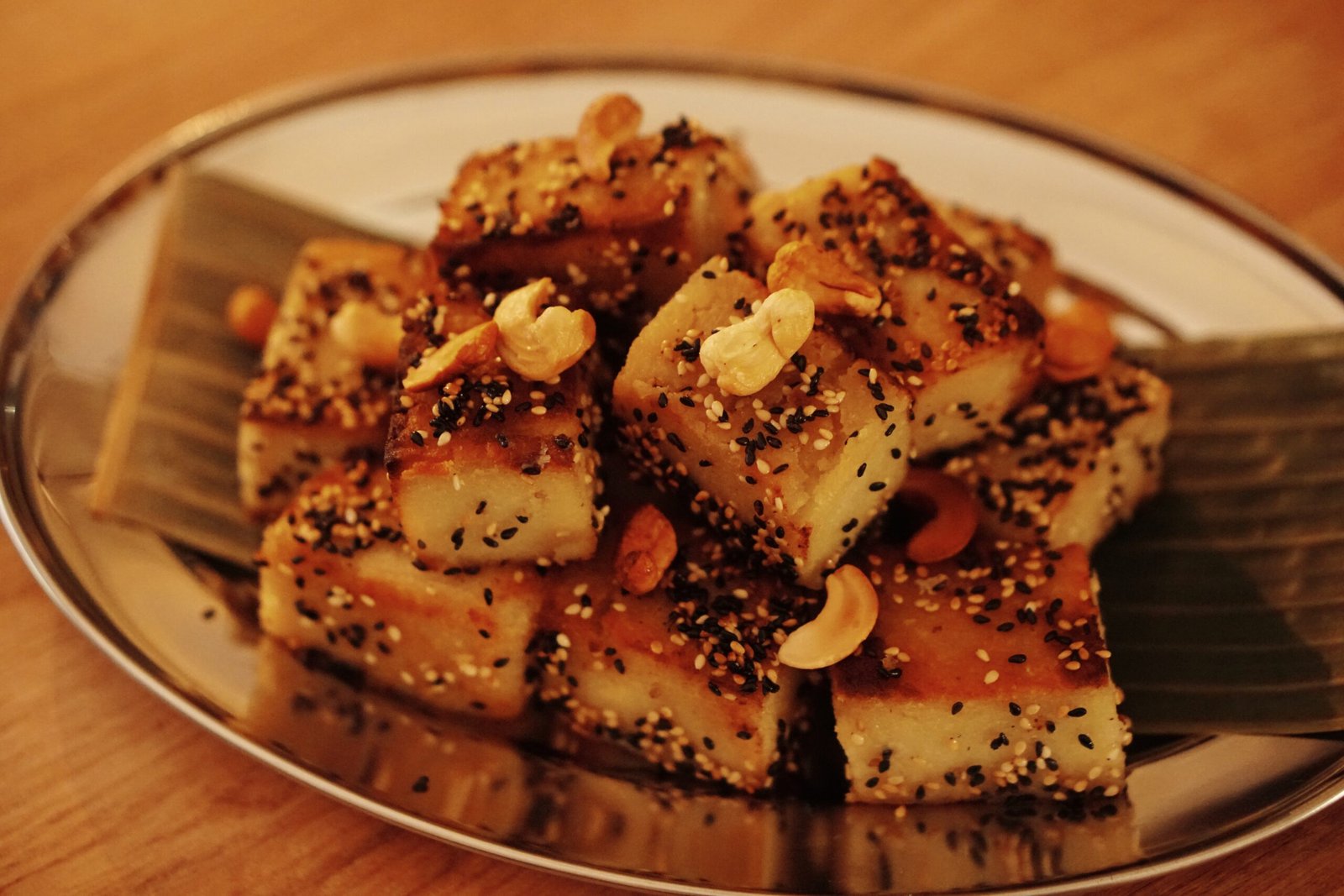
In March 2026, I served it at my supper club—adding my own twist: cooling, slicing, coating in sesame seeds, and pan-frying in ghee.
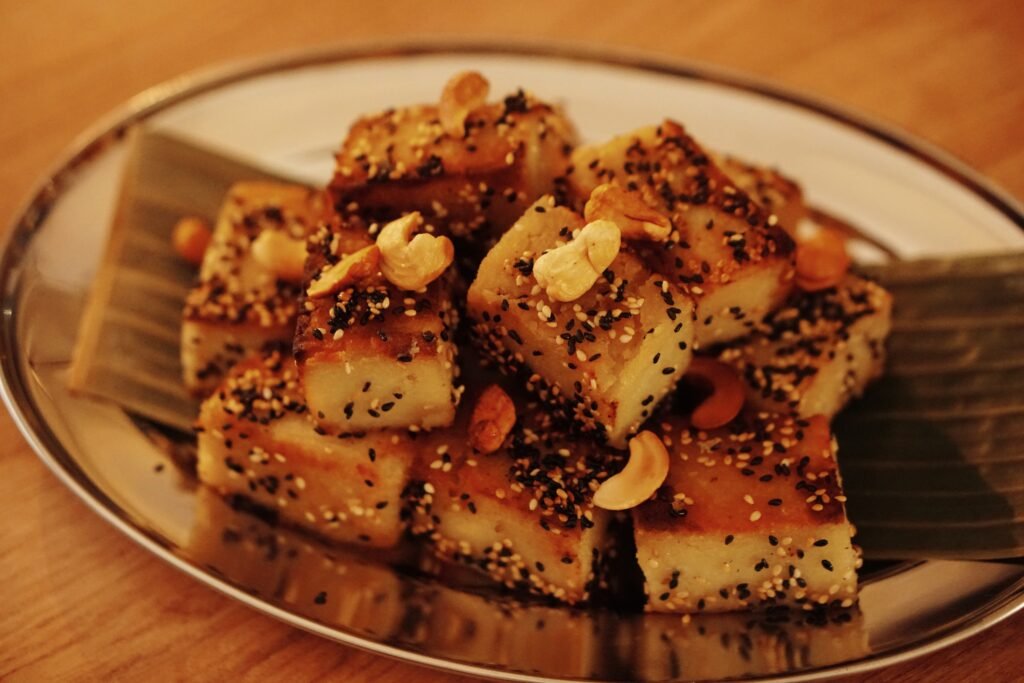
It transformed into something even more special—crispy, nutty, and deeply indulgent.
Ingredients (Serves 6–7)
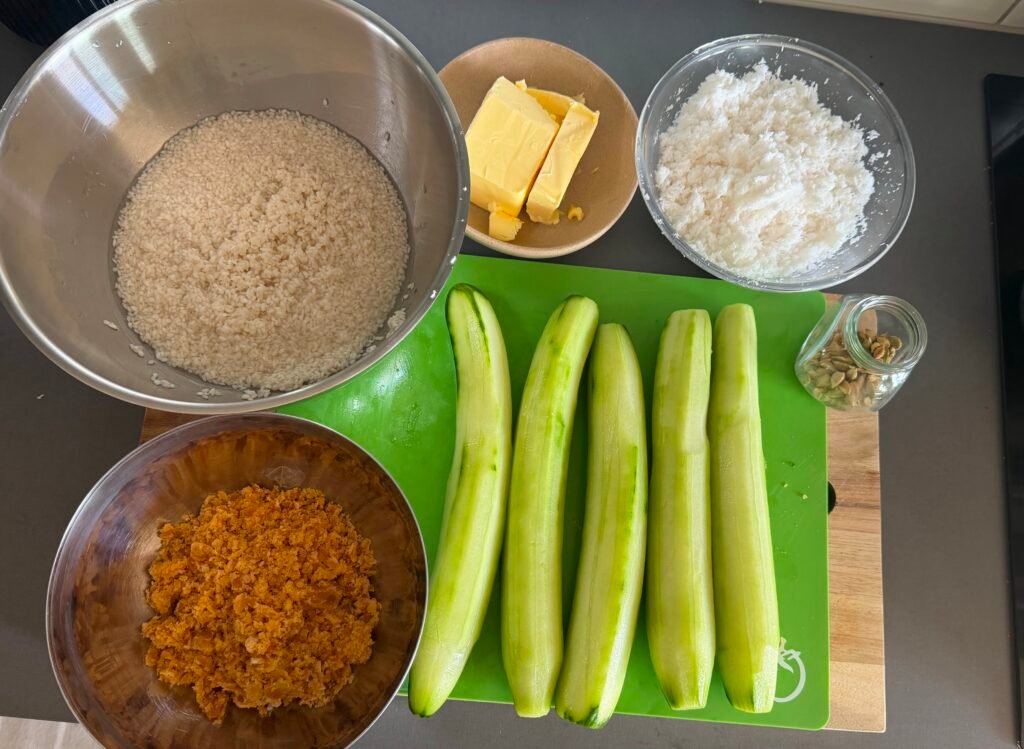
- 1 cup idli rice (~190 g), soaked
- 2–3 cardamom pods
- ~600 g cucumber (do not deseed or squeeze)
- 125 g jaggery (adjust to taste)
- 1.5 cup shredded coconut
- 150 g butter (75 g softened, 75 g melted)
- Pinch of salt
- Pinch of baking soda
How to Make Baked Thekkere Da Adde
1. Soak the Rice
Wash the rice until the water runs clear.
Soak for 4–6 hours or overnight.
2. Grind the Batter
Drain the rice completely.
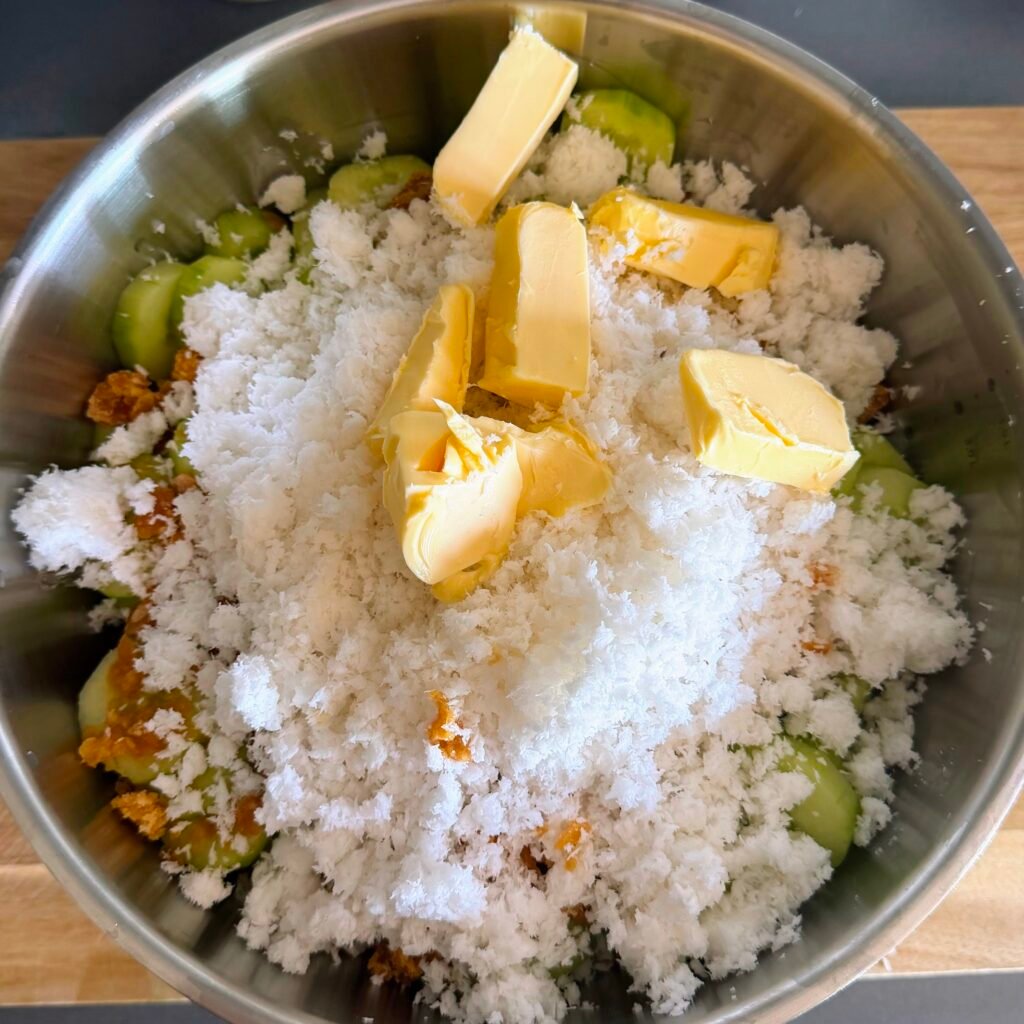
Grind together:
- Rice
- Cardamom
- Cucumber (with its natural water)
- Jaggery
- Coconut
- Softened butter
Grind to a slightly coarse batter (like dosa batter). Do not add water, as the cucumber should have enough water to grind it well.
Grinding Tip:
- Slightly coarse batter → rustic bite
- Fine batter → smoother, cake-like texture
- Both work; it depends on your preference and your use case. For my supper club, I made it super fine so the eating experience would contrast the texture of the sesame seeds.
- You may need to grind in batches if your grinder is small
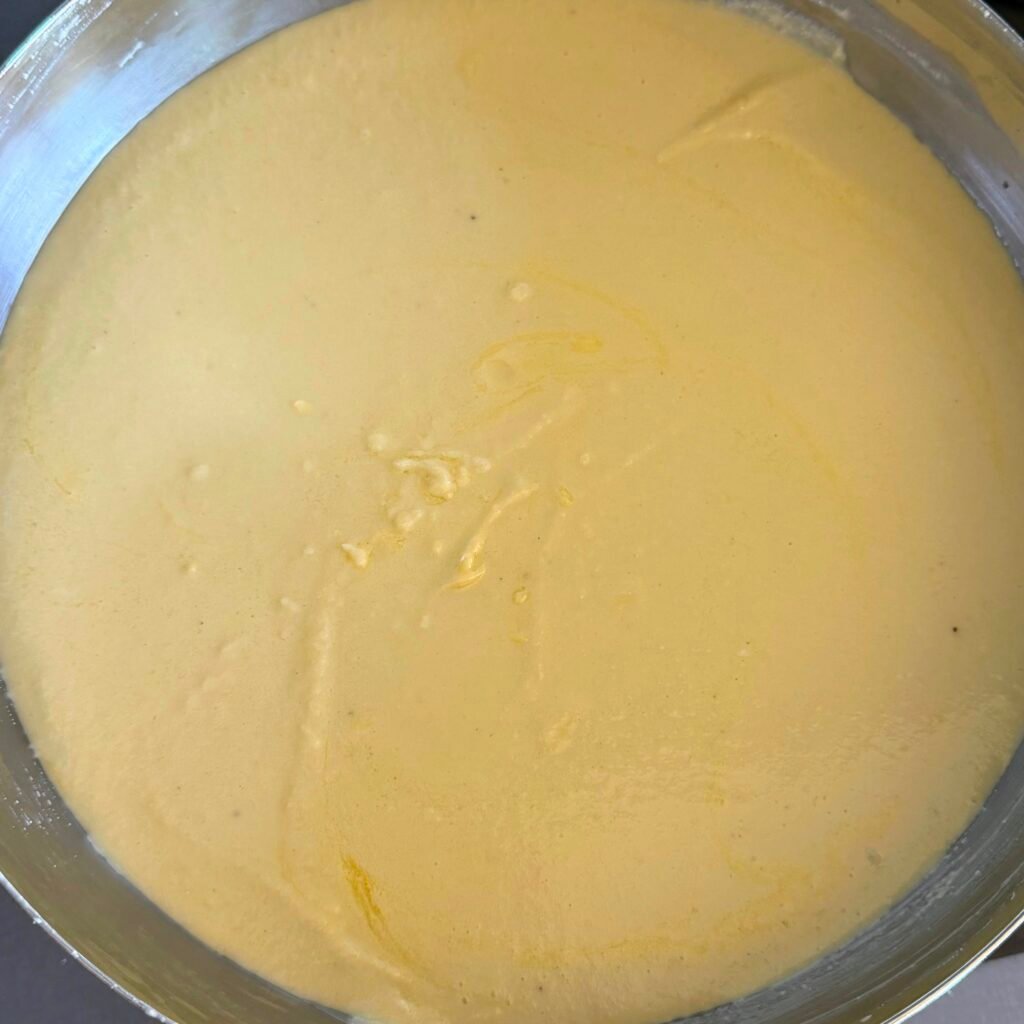
3. Finish & Rest
Transfer to a mixing bowl, add:
- Melted butter
- Pinch of salt
- Pinch of baking soda
Mix well and rest for 4–5 hours at room temperature.
Why resting matters: Hydrates rice, develops mild fermentation, softens crumb, and improves structure.
4. Bake
Preheat oven to 180°C (350°F).
Grease and line a 9-inch cake tin. Pour batter and level.
Bake 45–60 minutes, until:
- The top is deep golden brown
- Center is set
- Skewer comes out clean with small crumbs, just like how a cake bakes
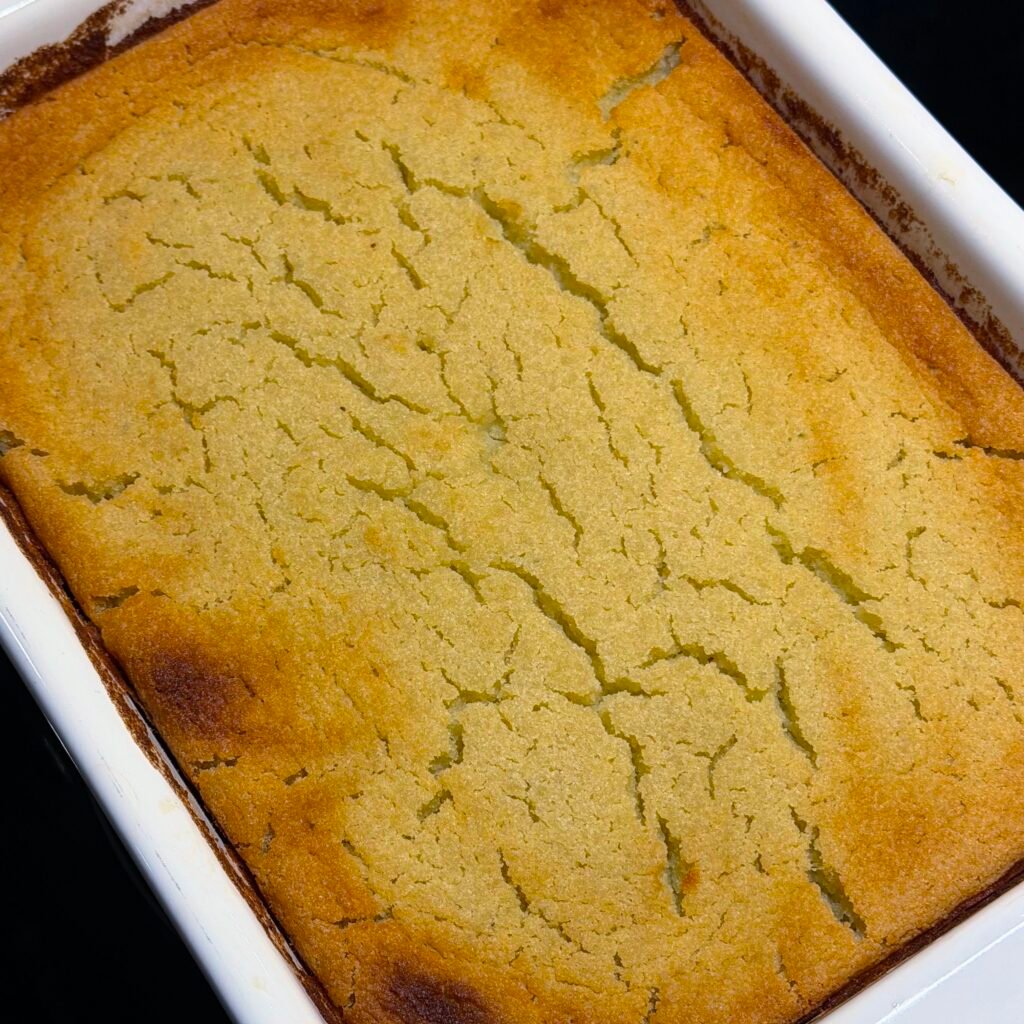
5. Cool & Set
Cool completely in the tin. The cake sets as it cools. Cutting while warm will result in a soft, unstable texture.
6. Serve
Classic: Slice and serve at room temperature—soft, moist, aromatic with cardamom and jaggery.
Supper Club Style: Slice the cooled cake, coat the edges with black & white sesame seeds, and pan-fry in ghee until golden. Optional: Fry cashews in ghee and place on top. This gives crisp edges, a nice nutty flavor and rich caramelization
Leftover batter idea: Mix with more rice paste or rice flour and make quick dosas.
Pro Tips
- Batter fineness affects texture: coarse = rustic bite, fine = cake-like. Both work and just depend on your preference.
- Grind in batches if your grinder can’t fit everything
- Don’t add water—the cucumber and jaggery supply enough
- Use fresh or frozen coconut; never desiccated
- Optional garnish: ghee-fried cashews, sesame seeds
- Use good jaggery – it defines the flavor
FAQ
Q: Can I steam instead of bake?
A: This recipe is designed for baking; steaming will create a softer, less structured cake due to the butter
Q: Can I make this without butter?
A: Yes, you can use ghee, but it will change the signature flavor.
Q: Can I use other rice?
A: Yes – Sona Masuri or other raw rice works. Soak for longer if using Sona Masuri for easy grinding.
Q: Why rest the batter?
A: Resting hydrates the rice, which allows mild fermentation, develops flavor, and improves texture. Skipping this step will result in a denser cake.
Q: How do I know it’s done?
A: Top is golden, center is set, skewer comes out mostly clean.
Q: Can I make it nutty or crunchy?
A: Yes – fry cashews in ghee and garnish, or coat slices in sesame seeds and pan-fry.
Q: How long does it keep?
A: 4–5 days refrigerated in an airtight container. Reheat or pan-fry to refresh.
Q: What about leftover batter?
A: Mix with more rice paste or rice flour and make quick dosas!
Historical Context
Traditionally, thekkere da adde is a monsoon special in coastal Karnataka, especially during Aati/Ashada month associated with seasonal, often plant-based foods believed to nourish the body. Steamed in turmeric leaves, it was a seasonal staple, deeply tied to Tulu culture and local festivities.
The original version is:
- Steamed
- Wrapped in turmeric leaves
- Lightly sweet and aromatic
This baked version keeps the core ingredients and spirit intact, while evolving into something more indulgent and adaptable
Final Thoughts
This dish sits somewhere between tradition and evolution. It carries the memory of Aati, of home kitchens and competitions, while also adapting beautifully to modern tables. Whether you serve it simply sliced or crisped up in ghee with sesame seeds, it’s one of those recipes that feels both nostalgic and new at the same time. I hope you try this version out and enjoy!
Baked Thekkere da Adde
Course: Breakfast, SnacksDifficulty: Medium7
servings20
minutes1
hour4
minutes6-7
hoursA baked version of the traditional Mangalorean thekkere da adde, made by grinding rice, cucumber, jaggery, and butter into a rested batter, then baked into a soft, fragrant cake.
Ingredients
1 US cup or 190g idli rice (soaked 4–6 hrs)
2–3 cardamom pods
600g cucumbers (2–3 long cucumbers, no deseeding)
1.5 US cup shredded coconut
125g jaggery (adjust to taste)
150g butter (75g softened, 75g melted)
Pinch of salt
Pinch of baking soda
Directions
- Soak the Rice
- Wash idli rice thoroughly until the water runs clear.
- Soak in plenty of water for 4–6 hours (or overnight).
- Prepare the Batter
- Drain the soaked rice completely.
- Add to grinder along with: Cardamom, Chopped cucumber, Coconut, Jaggery, Softened butter (75 g)
- Grind to a slightly coarse batter:
- Texture should resemble dosa batter. Do not add water as the cucumbers provide sufficient moisture.
- Finish & Rest the Batter
- Transfer batter to a mixing bowl.
- Add: Melted butter (75 g), Pinch of salt, pinch of baking soda
- Mix until fully incorporated.
- Cover and rest for 4–5 hours at room temperature.
- Baking
- Preheat oven to 180°C (350°F).
- Grease and line a 9-inch cake tin.
- Pour batter into the tin and level the surface.
- Bake for 45–60 minutes, until the top is deep golden brown and the center is set
- Skewer inserted comes out mostly clean, just like a cake
- Cooling & Setting
- Remove from the oven and let cool in the tin completely
- Important: the cake sets as it cools, cutting while warm will result in a soft, unstable texture
- Serve
- Slice and serve at room temperature
- Soft, moist, aromatic with cardamom and jaggery
- To make it bougie – Cool completely and slice into portions, coat sides in a mix of black & white sesame seeds, pan-fry in ghee over medium heat until golden
Recipe Video
Notes
- Sweetness control: Jaggery intensity varies so taste the batter before baking and adjust to your preference
- Butter is essential: This is intentionally a rich, celebratory version
- Resting is non-negotiable for the best results








Leave a Reply